|


 Send Inquiry
 Send SMS



 English
 Spanish
 French
 German
 Italian
 Chinese (Simplified)
 Japanese
 Korean
 Arabic
 Portuguese
 Send Inquiry
Remote Firing Device
MOQ : 1 Box
Remote Firing Device Specification
- Way
- Single and Dual Way Options
- Panel Type
- Handheld
- Cooling System
- Passive Vent
- Components
- Transmitter, Receiver, Keypad, Indicators
- Features
- Long Range, Secure Transmission, Low Power Warning, Quick Setup
- Connectivity Type
- Wireless
- Rated Operation Voltage
- 12 V DC
- Cabinet Material
- Reinforced ABS
- Cover Material
- Reinforced Plastic
- Current Rating
- 10A
- Rated Current
- 10A
- Thickness
- 28 mm
- Control System
- Wireless RF Remote
- Protection Class
- Class II
- Protection Level
- IP65
- Rated Insulation Voltage
- 24 V DC
- Product Type
- Remote Firing Device
- Surface Color
- Matte Black & Yellow
- Rated Voltage
- 12 V DC
- Frequency (MHz)
- 433 MHz
- Maximum Output Current
- 10A
- Dimension (L*W*H)
- 160 mm x 90 mm x 55 mm
- Application
- Explosive Initiation, Demolition Control
- IP Rating
- IP65
- Display Type
- LED Indicator
Remote Firing Device Trade Information
- Minimum Order Quantity
- 1 Box
- FOB Port
- Courier
- Supply Ability
- 100 Boxes Per Month
- Delivery Time
- 7 Days
- Sample Available
- Yes
- Sample Policy
- Contact us for information regarding our sample policy
- Packaging Details
- 100 % safety guarantee
- Main Domestic Market
- All India
About Remote Firing Device
With diligent efforts of our employees, we are able to manufacture, supply and export Remote Firing Device. It is designed by our professionals using qualitative components, sourced by our procuring agents from the leading vendors. Offered device is appreciated by clients for its high efficiency, low maintenance, easy installation and hassle-free functioning. Furthermore, we check the offered device on different quality parameters with the help of our well-trained quality controllers to make it completely defect-free. Our Remote Firing Device is integrated with sophisticated phase failure alarm which ensures its high protection.
Other details:
Yudian Make AIJK Series SCR (Thyristor) Firing Device
- Control Input: 0~20mA (0~5V) and 4~20mA(1~5V) Signal input are selectable
- Trigger Output: Linear Phase Angle Fired output (Designed up to 300A
- Alarm: Phase failure and over shoot checking and alarming
- Power Supply: 220VAC 50 Hz
- Output source (Built In): 5V and 24V DC
- Soft Start/Soft Stop Time: 141 Seconds
- Size (W x H x D): 80 X 150 X 35 (DIN rail mounted)
- Current F/B limit and Overshoot alarm
- Phase failure alarm
- Linearized power output
- Operating Ambient: Temp. 10C~60°C
- Humidity : <90%RH
- Indication of RUN and ALARM Current F/B limit and Overshoot alarm phase failure alarm Linearized power output.
Secure, Reliable Wireless Explosive Control
This Remote Firing Device features a state-of-the-art wireless RF system, offering both single and dual operation modes. Its secure 433 MHz frequency and reinforced ABS cabinet material ensure safe, tamper-resistant control during explosive initiation or demolition tasksideal for use in hazardous and remote areas.
Rugged Design with Enhanced Protection
Constructed with a matte black and yellow reinforced plastic shell, this device meets IP65 and Class II protection standards, providing effective resistance to dust and water ingress. The passive vent cooling and ergonomic design ensure durability and ease of use, even in extreme field conditions.
Practical Features for Field Use
The device comes equipped with an LED indicator display, low power warning, quick setup guidance, and a range of connectivity options for versatile applications. Its handheld format and lightweight construction support rapid deployment and efficient field operations for demolition control.
FAQs of Remote Firing Device:
Q: How does the Remote Firing Device ensure safe and secure operation during explosive initiation?
A: The device operates on a wireless RF frequency of 433 MHz with secure transmission protocols, minimizing the risk of interference or unauthorized activation. Its IP65 protection level and reinforced plastic casing also safeguard components from environmental hazards.Q: What are the main benefits of the devices handheld design and quick setup feature?
A: The compact handheld panel allows for easy portability and intuitive use in the field. Quick setup ensures minimal downtime, enabling professionals to deploy the device rapidly during critical operations.Q: Where can this Remote Firing Device be effectively used?
A: It is ideal for use in demolition control, explosive initiation, and controlled detonation scenarios, especially in construction, mining, and military operations where wireless and secure remote activation is essential.Q: What is the process for connecting and operating the device?
A: Users first pair the transmitter and receiver, confirm LED indicators are showing correct status, and then use the keypad to input commands. The wireless connectivity simplifies operation without the need for extensive wiring, allowing remote control from a safe distance.Q: When should I consider using dual-way operation versus single-way?
A: Dual-way operation is suitable for managing multiple circuits or devices simultaneously, providing greater flexibility in complex demolitions. Single-way is recommended for straightforward, single-charge setups.Q: What maintenance or safety checks are required before use?
A: Check that the device is charged (or supplied with power), indicators display normal function, and all external connections are secure. Confirm the IP65 seals are intact, especially in wet or dusty environments, to maintain protection standards.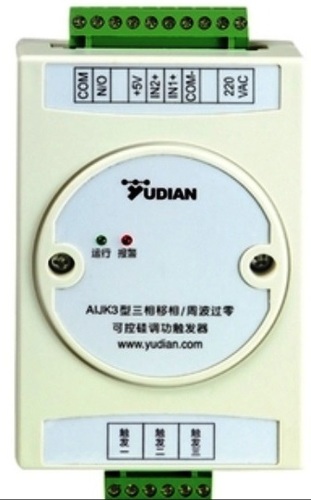
Tell us about your requirement

Price:
Quantity
Select Unit
- 50
- 100
- 200
- 250
- 500
- 1000+
Additional detail
Mobile number
Email

More Products in PID Temperature Controller Category
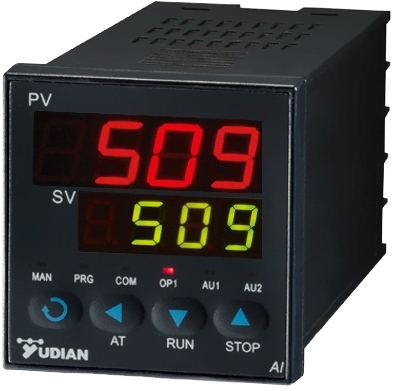
Digital PID Temperature Controller
Price 1650.00 INR / Box
Minimum Order Quantity : 1 , , Box
Surface Color : Black
Dimension (L*W*H) : 96 x 48 x 90 mm
Rated Operation Voltage : 220V AC
Material : Other, Plastic Body, Electronic Internal Components
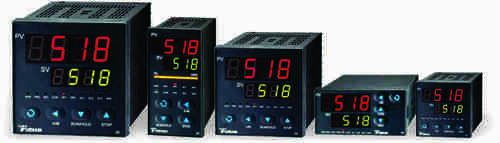
Process Controller
Price 1650.00 INR / Piece
Minimum Order Quantity : 1 , , Box
Surface Color : Black
Dimension (L*W*H) : 96 x 96 x 72 mm
Rated Operation Voltage : 220240V
Material : Other, Metal and Engineering Plastic
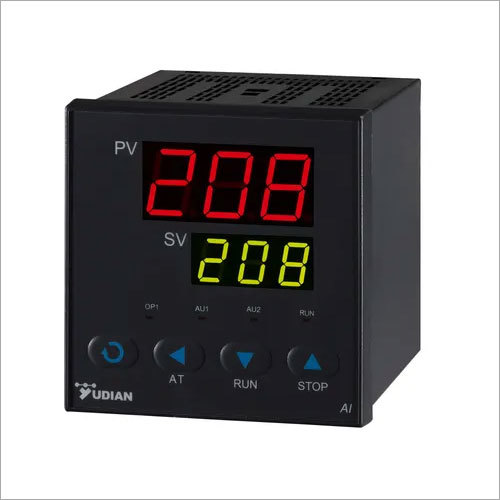
Temperature Controller
Price 1800 INR / Box
Minimum Order Quantity : 10 Boxes
Surface Color : Black
Dimension (L*W*H) : 9696, 7272, 4848, 4896, 9648 Millimeter (mm)
Rated Operation Voltage : 100240VAC, 15%, +10% / 5060Hz.
Material : ABS
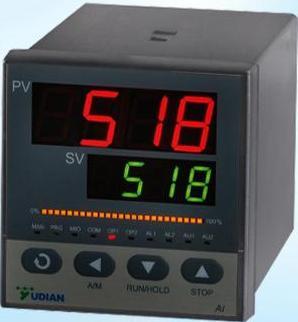
Programmable PID Controller
Price 7800 INR / Box
Minimum Order Quantity : 1 Box
Surface Color : Black
Dimension (L*W*H) : 48 x 48 x 95 (D2 size) 72 x 72 x 95 (D size), 48 X 96 X 95 (E size), 96 X 48 X 95 (F size), 96 x 96 x 100 (A size) ,E5 (DIN rail mounting), Millimeter (mm)
Rated Operation Voltage : Linear current /voltage
Material : Metal Base

Contact Details
MICON AUTOMATION SYSTEMS PVT. LTD.
GST : 24AAECM7879C1ZB
GST : 24AAECM7879C1ZB

- B No A-814, OFF S.G. HIGHWAY, B/H DCP OFFICE, MAKARBA,Ahmedabad - 380051, Gujarat, India
- Phone : 08045479004

- Mr Niket S Gorakhia (Director)
- Mobile : 08045479004
- niket@miconindia.com
 Send Inquiry
 Send Inquiry
 Send SMS
 |
MICON AUTOMATION SYSTEMS PVT. LTD.
All Rights Reserved.(Terms of Use) Developed and Managed by Infocom Network Private Limited. |
